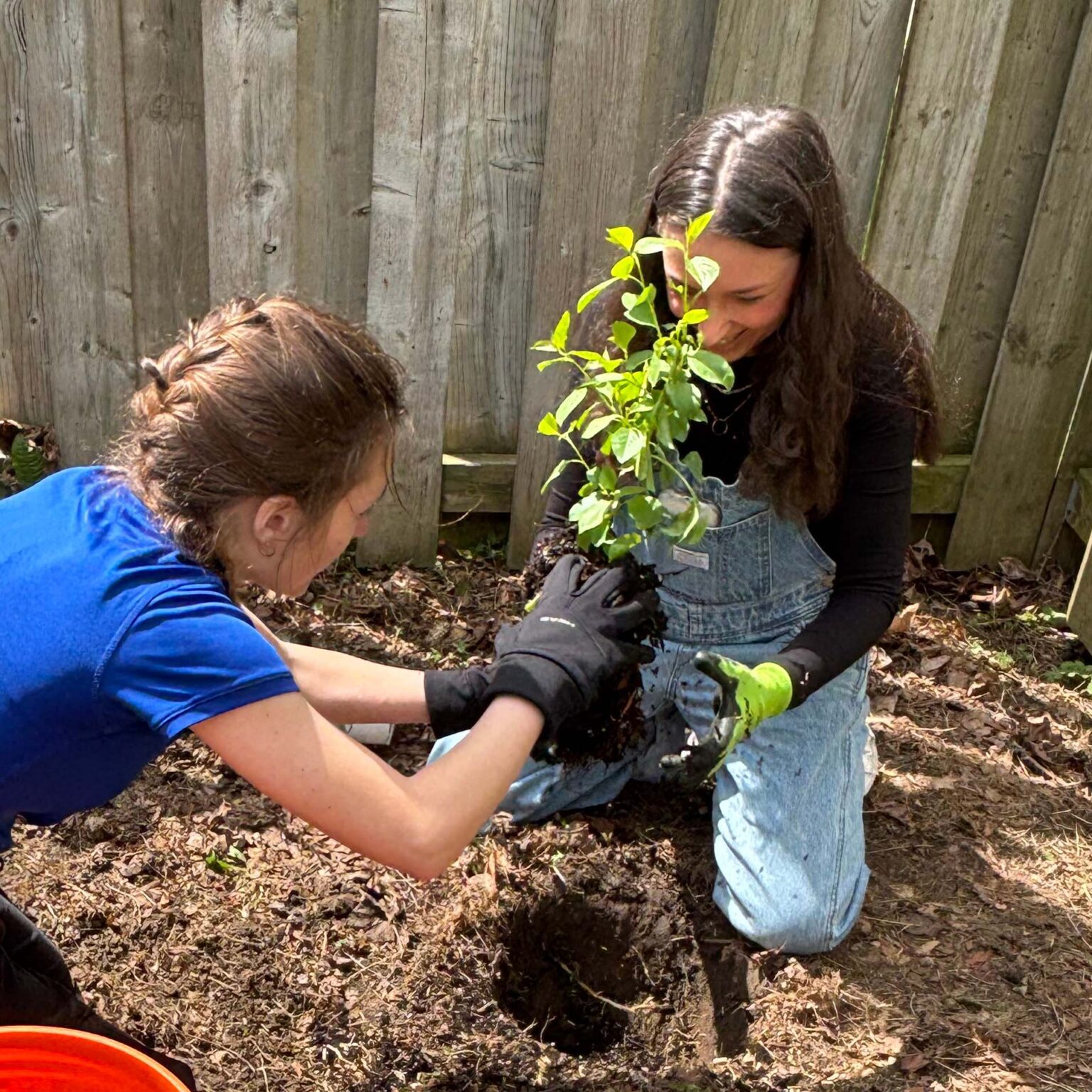

A new season of growth is sprouting across Canada. Communities are busy with a wide range of urban greening projects supported by Green Communities Canada through the Living Cities Canada Fund.
Most of these projects won’t be complete until the fall. But we are excited to share highlights from a few early birds that already finished their work!
Growing Healing and Reconciliation at a Public School in Toronto
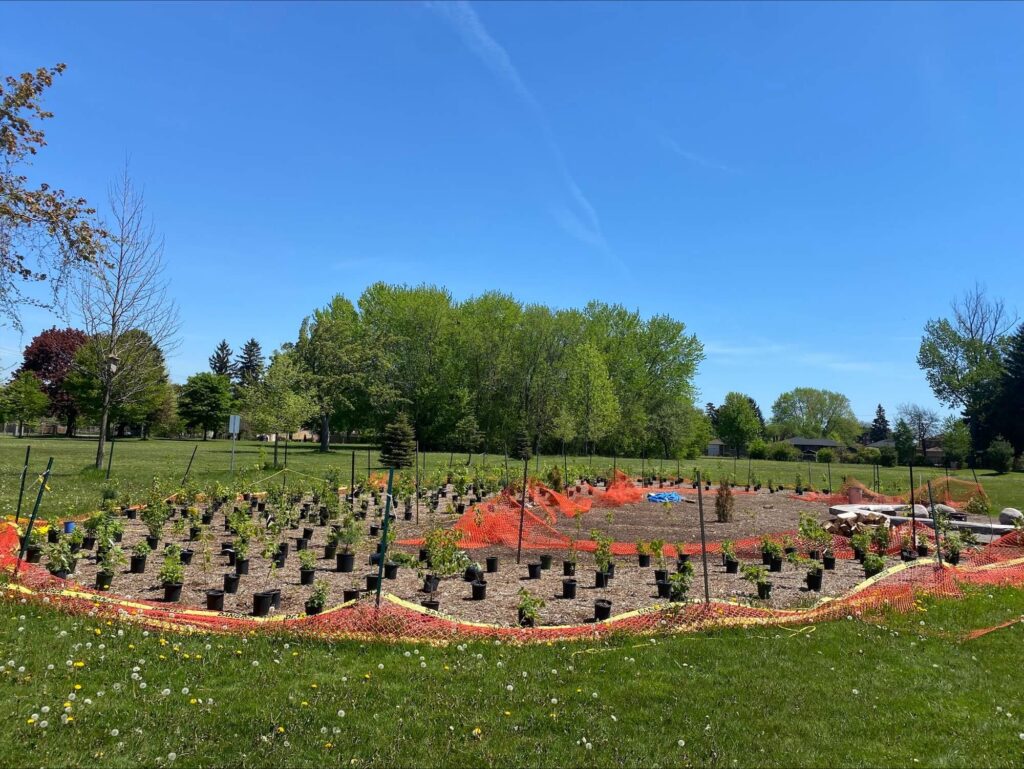
Many public schools have sections of their school yards that are underused. Eastview Public School in Toronto is no exception to this. They transformed one underused space into a vibrant Healing Mini Forest. This project created a new space for outdoor learning and community connection.
160 students joined teachers, community volunteers, City of Toronto staff, and Indigenous partners for a hands-on planting day on May 27, 2026. The new mini forest features nearly 500 plants. This includes native trees and shrubs, such as sugar maple, white cedar, and elderberry, all planted using the Miyawaki Method. The project also created raised garden beds that are growing culturally significant plants like tobacco, sweetgrass, cedar, and strawberries.
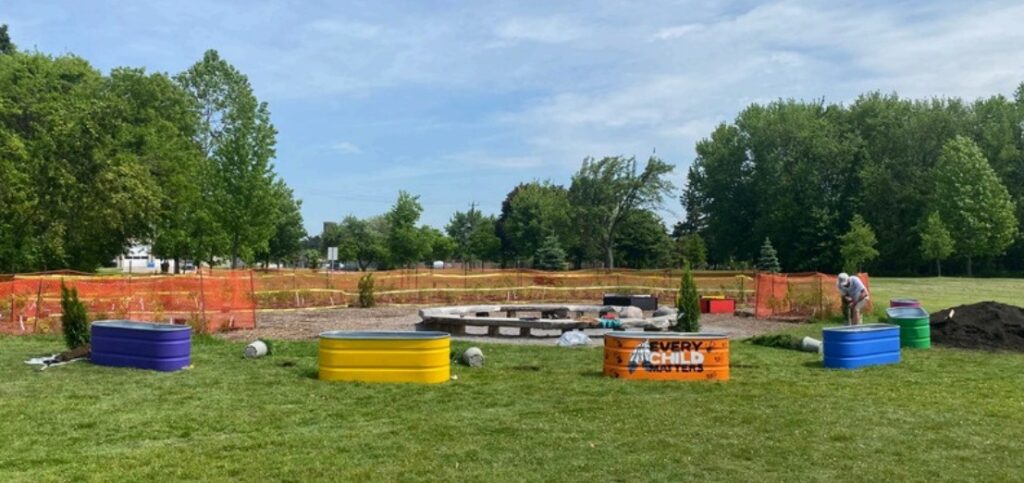
This project is unique because it doubles as a healing forest. The healing forest wraps around a central gathering space with log bench seating surrounding a sacred fire pit.
The Urban Indigenous community and local partners collaborated to design the site. The space now serves as the central location for the school’s annual powwows, and a place where the sacred fire is lit during times of loss. As the forest grows around the fire pit, roots of reflection, learning, and community connection will deepen in this space.
What is a healing forest?
A healing forest is a garden or green space designated as a place for reconciliation, learning, healing, and connection. Healing forests serve as living memorials. They acknowledge the ongoing legacy and impacts of colonialism and the residential school system. They honour residential school Survivors, those who never returned home, their families and communities, as well as murdered and missing Indigenous women, girls, and Two-Spirit people, and children who were removed from their families through policies such as the Sixties Scoop. Healing forests are developed in partnership with Indigenous communities and organizations. They provide places for reflection, ceremony, education, and remembrance while fostering stronger relationships between people and the land.
Planting the Seeds of Inclusion for Community Living in London
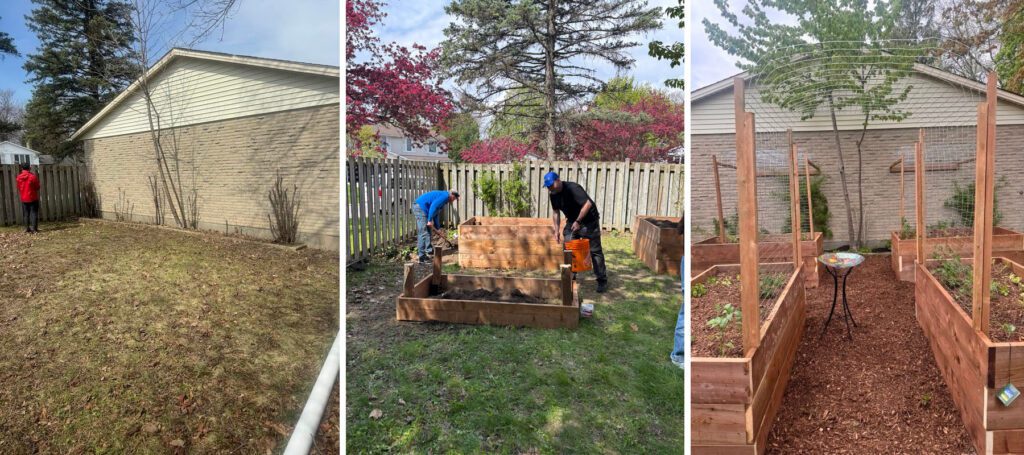
People living in shared housing and with developmental disabilities ought to have access to growing greenspaces and edible gardens. The London Environmental Network (LEN) partnered with Community Living London (CLL) to make this happen. Together, they created an edible landscape with and for individuals with developmental disabilities living in shared community housing.
Planting day brought together CLL tenants and staff in a collaborative, hands-on effort. Volunteers worked side by side to build, plant, and shape the landscape. Together, they ensured everyone meaningfully contributed to the creation of this new greenspace.
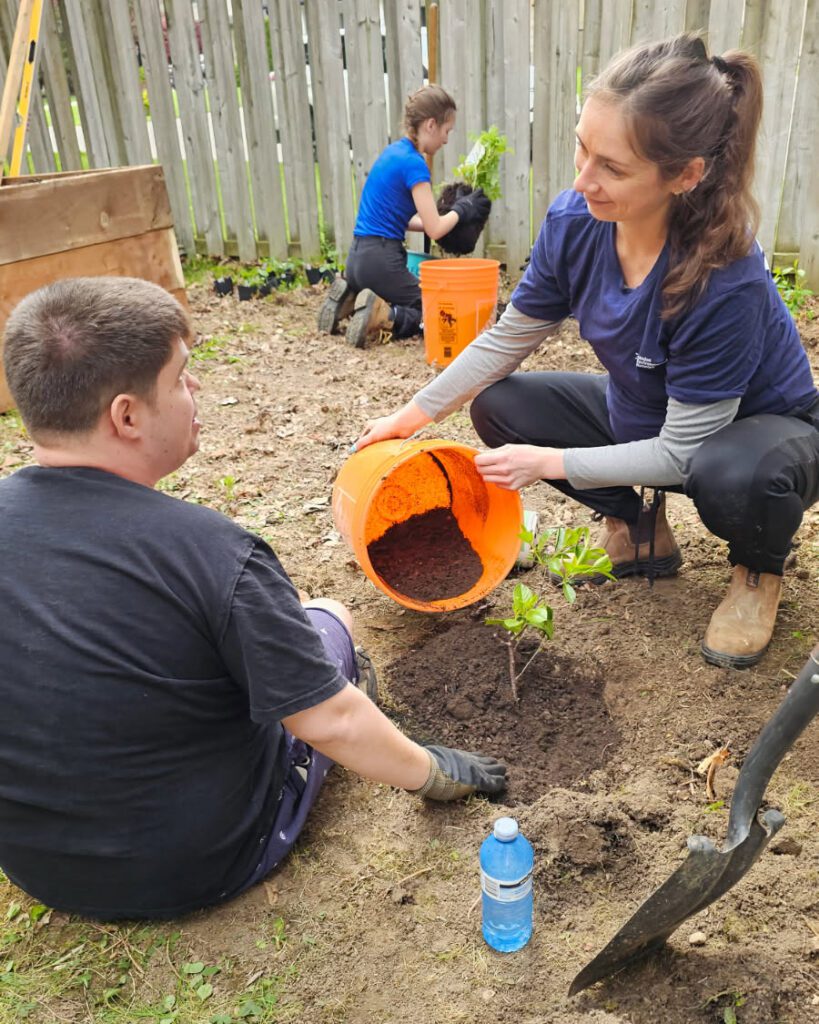
The hard work resulted in new raised garden beds for vegetables and herbs. They also planted fruit trees and shrubs. And they created additional features like arched trellises and seating so that the space is as much about food production as it is about everyday enjoyment.
The collaboration achieved much more than just a physical transformation. The project strengthened community bonds. It opened new avenues for residents to engage with nature and learn new skills.
Dense planting, mulching, and companion planting were all part of a sustainable design: these features can reduce the need for maintenance. Staff from the London Environmental Network will support and guide residents and staff on long-term maintenance. Being an active part in ongoing care is part and parcel of enjoying the benefits of the shared green space for years to come.
Creating Pollinator Habitat and Cultivating Belonging in Thornhill
For more than 50 years, Reena has supported people with developmental disabilities to live, learn, work, and participate fully in their communities. This spring, the organization furthered this commitment through its Neighbourhood Network – Distributed Pollinator Garden project. This project offers opportunities for Reena tenants to expand pollinator habitats in seven locations across Thornhill, ON. Project sites included community gardens, residential sites, a library, conservation lands, and other Reena-operated properties. The goal is to create a network of pollinator plantings across the community that supports both biodiversity and food production.
Volunteers planted about 1,000 pollinator plants, including wild strawberry, pearly everlasting, and black eyed susan. These plants went into a variety of in-ground gardens, raised beds, and 15 uniquely portable “pollinator pods.” The Reena team carefully selected plant species and paired them with vegetables grown in community gardens. Vegetables included tomatoes, cucumbers, peppers, beans, zucchini, and eggplants. This pairing of vegetables with pollinator plants helps improve pollination and support a healthy harvest.
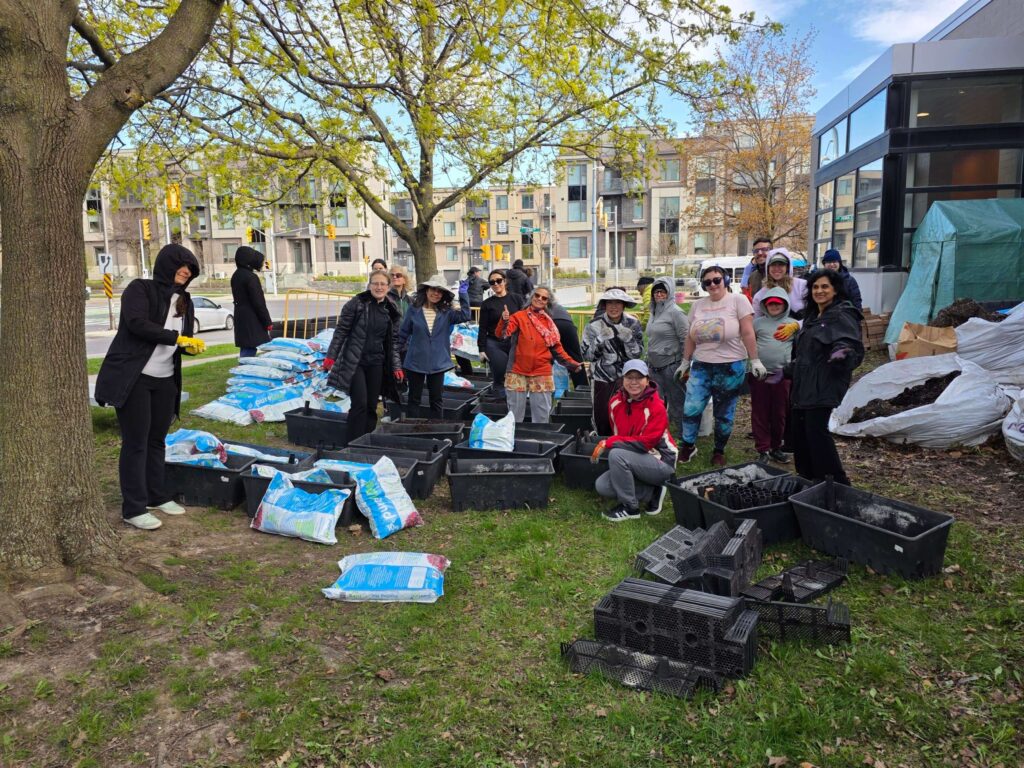
With seven planting locations across the city, each location had its own unique community with its own needs and interests. Reena helped plan planting events at each location, including activities that reflected those local needs and interests.
Volunteers connected with nature and each other while learning new skills through a variety of hands-on activities. All this happened in a shared community space that is now home to shared memories and a sense of belonging.
Reena staff and tenants will continue care and stewardship of these gardens to support both pollinators and people. This network of pollinator plantings demonstrates how green infrastructure projects rooted in inclusivity can cultivate belonging, accessibility, and biodiversity at the same time.
Greenspaces thrive thanks to a Community of Care in Winnipeg
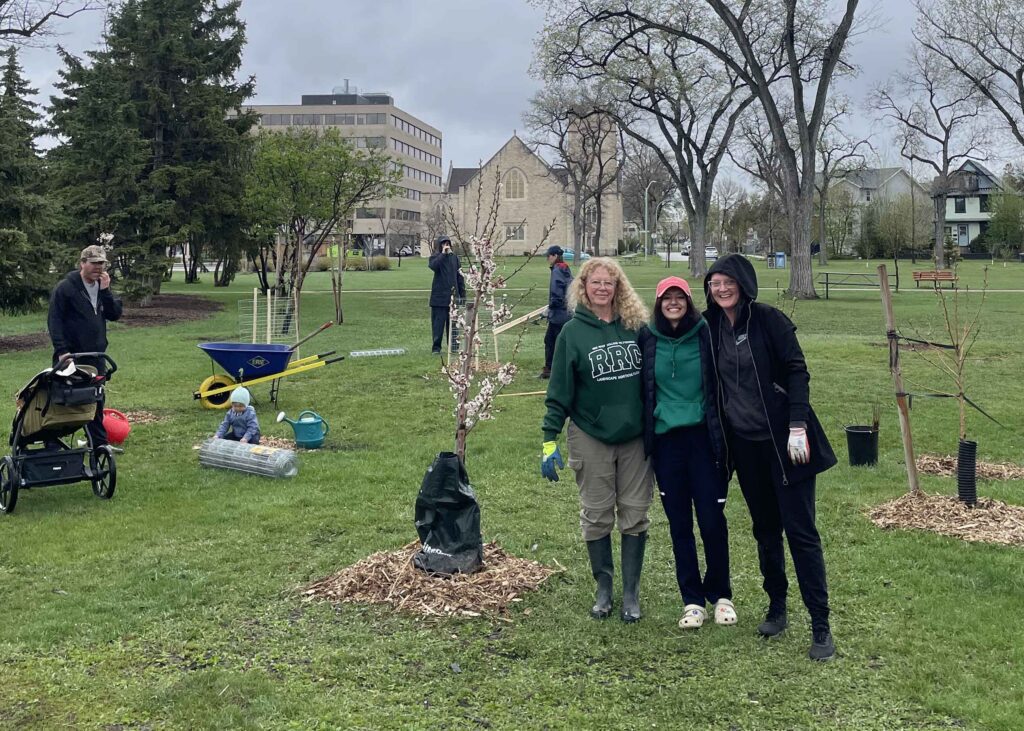
Green infrastructure requires ongoing care and maintenance to deliver lasting benefits for communities. The Wolseley Residents’ Association is doing exactly that by investing in the long-term stewardship of a network of community green spaces in Winnipeg, MB.
Building on several years of greening efforts, this year the Wolseley Residents’ Association applied for a Thriving Microgrant from our Living Cities Canada Fund. Launched in 2025, these microgrants address a critical gap in funding for nature-based solutions: support for ongoing maintenance.
This particular project focused on enhancing and maintaining community gardens, orchards, schoolyard green spaces, and pollinator habitats at Vimy Ridge Park, Wolseley School, Mulvey School, and Laura Secord School. One of the project’s greatest successes was the incredible level of community participation. More than 650 youth took part in the project by helping design the schoolyard green spaces and during planting days by digging holes and planting trees and shrubs.
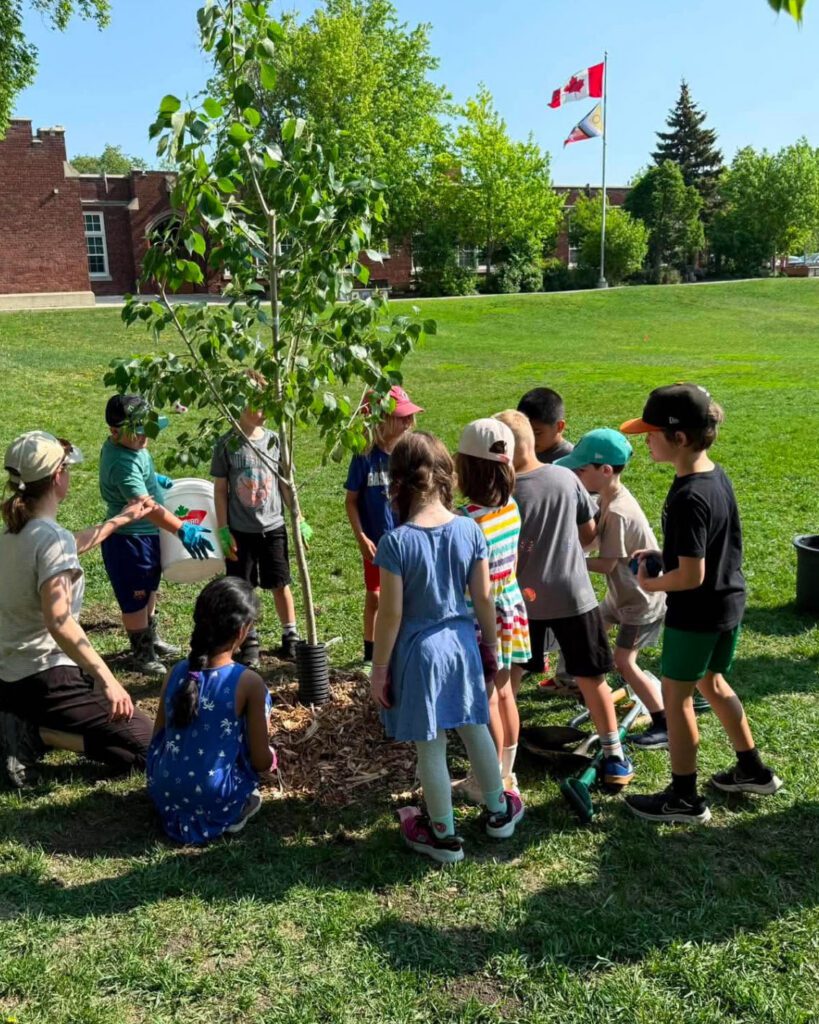
Their ideas and creativity led to the introduction of more whimsical features, like willow arches, tree cookie step stones, and stumps for natural play and exploration. Parent councils and families also helped organize and support the planting events, while other community members contributed their time through neighbourhood work bees and ongoing maintenance activities. In total, the project engaged over 700 volunteers to help repair garden infrastructure, apply mulch, protect existing plantings, establish ongoing watering and maintenance programs, and also add 22 trees, 71 shrubs, and numerous perennial pollinator species.
The enthusiasm and engagement shown by students, volunteers, and community partners have laid a strong foundation for future maintenance initiatives and the continued care of Wolseley’s growing urban forest, pollinator habitats, and community green spaces.
Transforming a Schoolyard into a Living Classroom in Pointe-Claire
GRAME transformed more than 1,400 square metres of school grounds at St. John Fisher Junior School into a greener, healthier, and more inviting space for students to learn, play, and connect with nature. By planting 13 trees and 20 shrubs across the school grounds, the project added much-needed shade, enhanced biodiversity, and created new opportunities for outdoor learning.
The site is located adjacent to a nearby community park and two neighbouring schools. The new plantings strengthen the existing network of green space and now serve as an additional welcoming green space that will benefit community members for years to come.
The planting plan was designed to complement the existing environment and address areas in need of greening. Firstly, large and medium-sized trees were planted in front of the school to provide shade for the playground. Secondly, a diverse mix of flowering and fruiting trees and shrubs was planted within the existing school garden to attract pollinators and to boost biodiversity. Finally, a mix of trees and shrubs was planted along both sides of the path leading to the school’s secondary entrance, creating a green tunnel that will mature over time and provide shade, beauty, and habitat.
Community engagement was at the heart of the project. Working closely with the school administration and board, the City of Pointe-Claire, and Soverdi, GRAME coordinated a planting event that actively involved approximately 60 students from three classes. Students learned about trees, pollinators, and stewardship before getting their hands dirty and planting the new vegetation themselves.
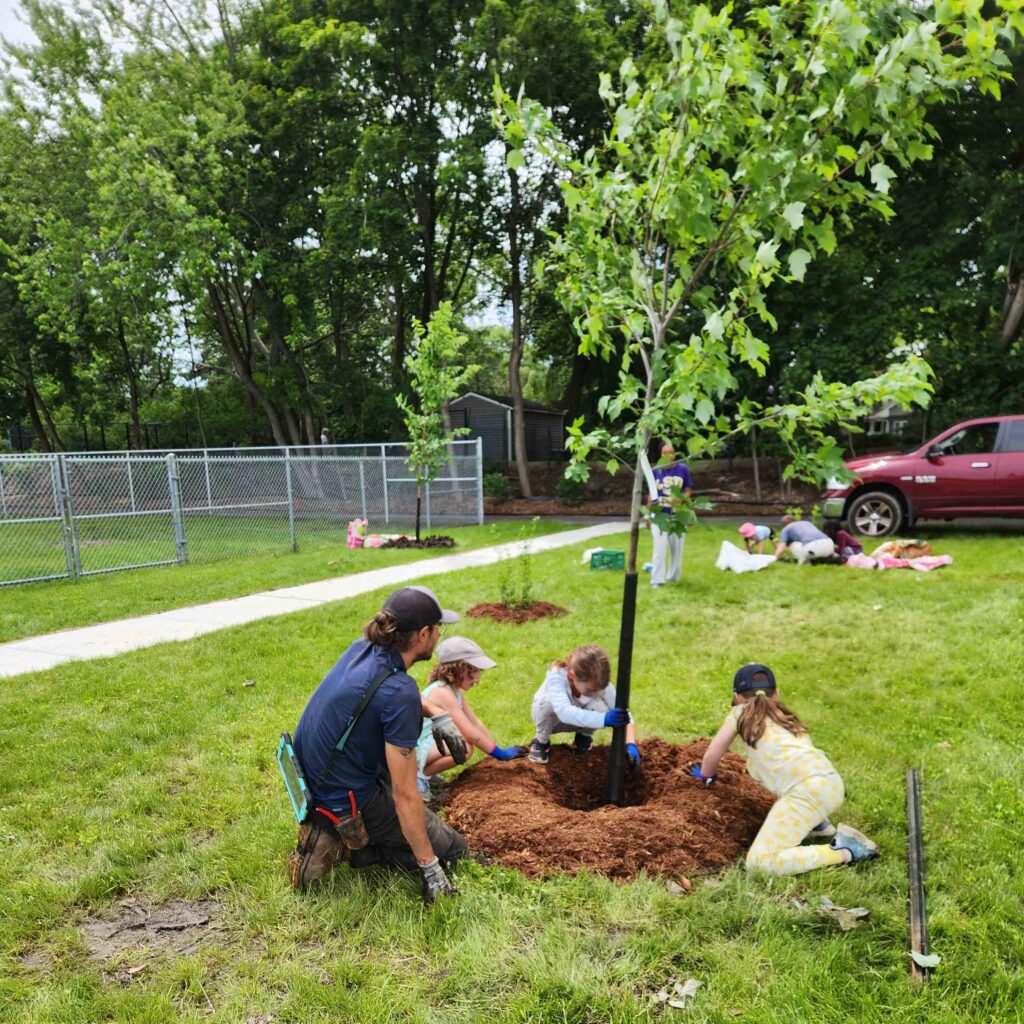
By participating directly in the creation of their schoolyard’s green infrastructure, students developed a stronger connection to nature and a greater sense of ownership and pride in their environment. The newly planted fruit-bearing trees and shrubs not only enhance biodiversity and food-growing opportunities but also represent the first steps toward creating an edible forest on the school grounds.
Stay tuned to our Living Cities Canada Fund events calendar to see upcoming planting events and opportunities to get involved. These spring projects showcase the power of community-led greening to create healthier, resilient, and more inclusive green spaces. These impacts are possible thanks to our ongoing partnership with Trees for Life and the generous support of our 2026 Living Cities Canada Fund – Definity Insurance Corporation, RBC Foundation, Heart Lake Committed Capital, and several other private philanthropic foundations. As we look ahead, Green Communities Canada is excited to support many more planting events this fall that will grow greener, more connected communities across Canada!