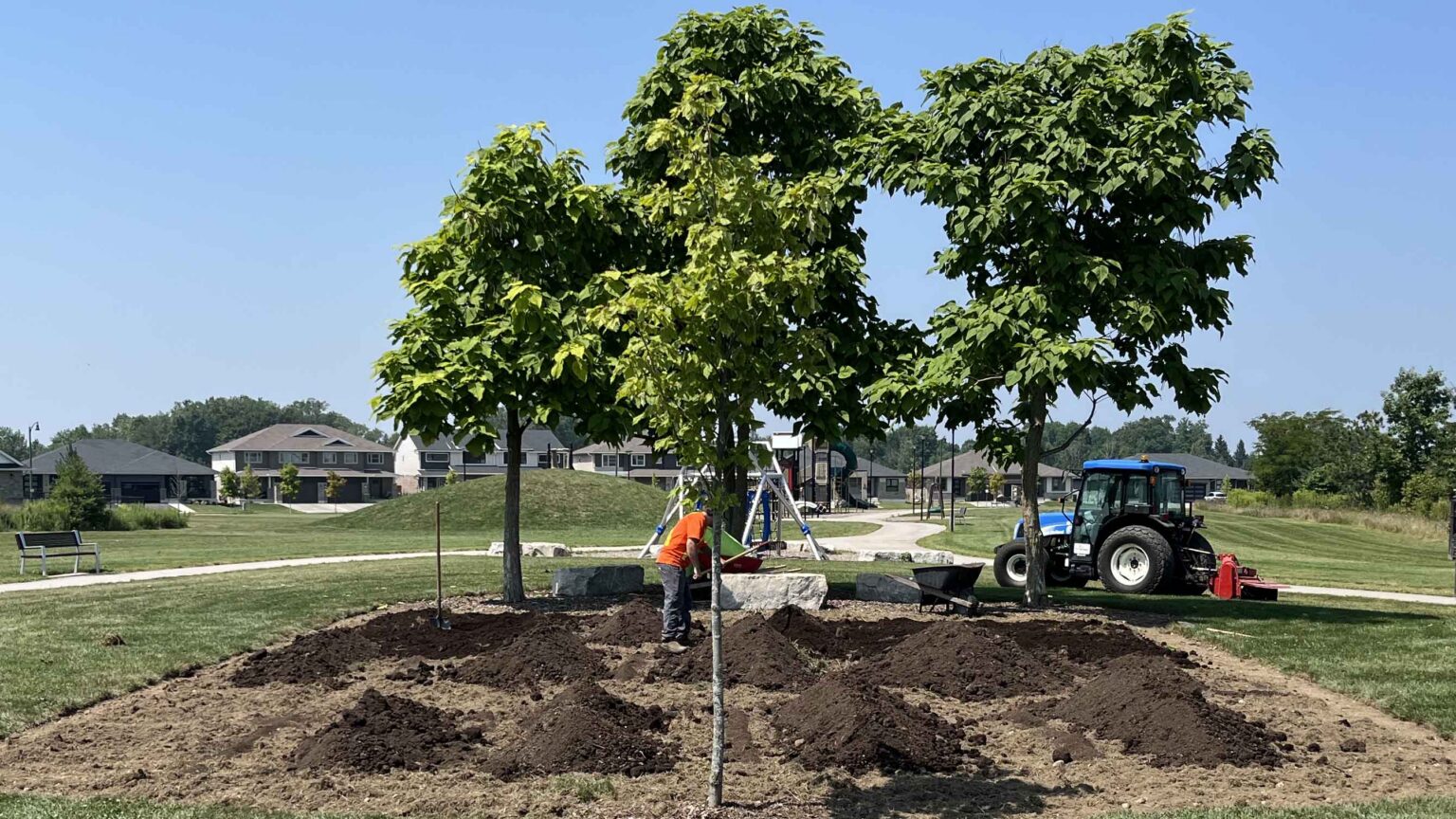

In 2025, Green Communities Canada began a partnership with Vineland Research and Innovation Centre. The goal was to learn more about the role soil health plays in the-long term success of mini forests across Canada. This partnership began with baseline soil sampling at five future mini forest sites. (Read about the five sites and baseline sampling here.) We are excited to report on how that baseline compared to analysis after soil amendments at each site.
What are mini forests?
Mini forests are small in size, but they’re anything but mini in terms of their impact. Using the Miyawaki method, these dense plantings mix a diversity of native trees and shrubs. They mimic the structure and biodiversity of natural forests. In urban settings, mini forests can pack a lot of benefits into relatively compact spaces. They provide habitat for wildlife, boost biodiversity, store carbon, and help communities adapt to climate change.
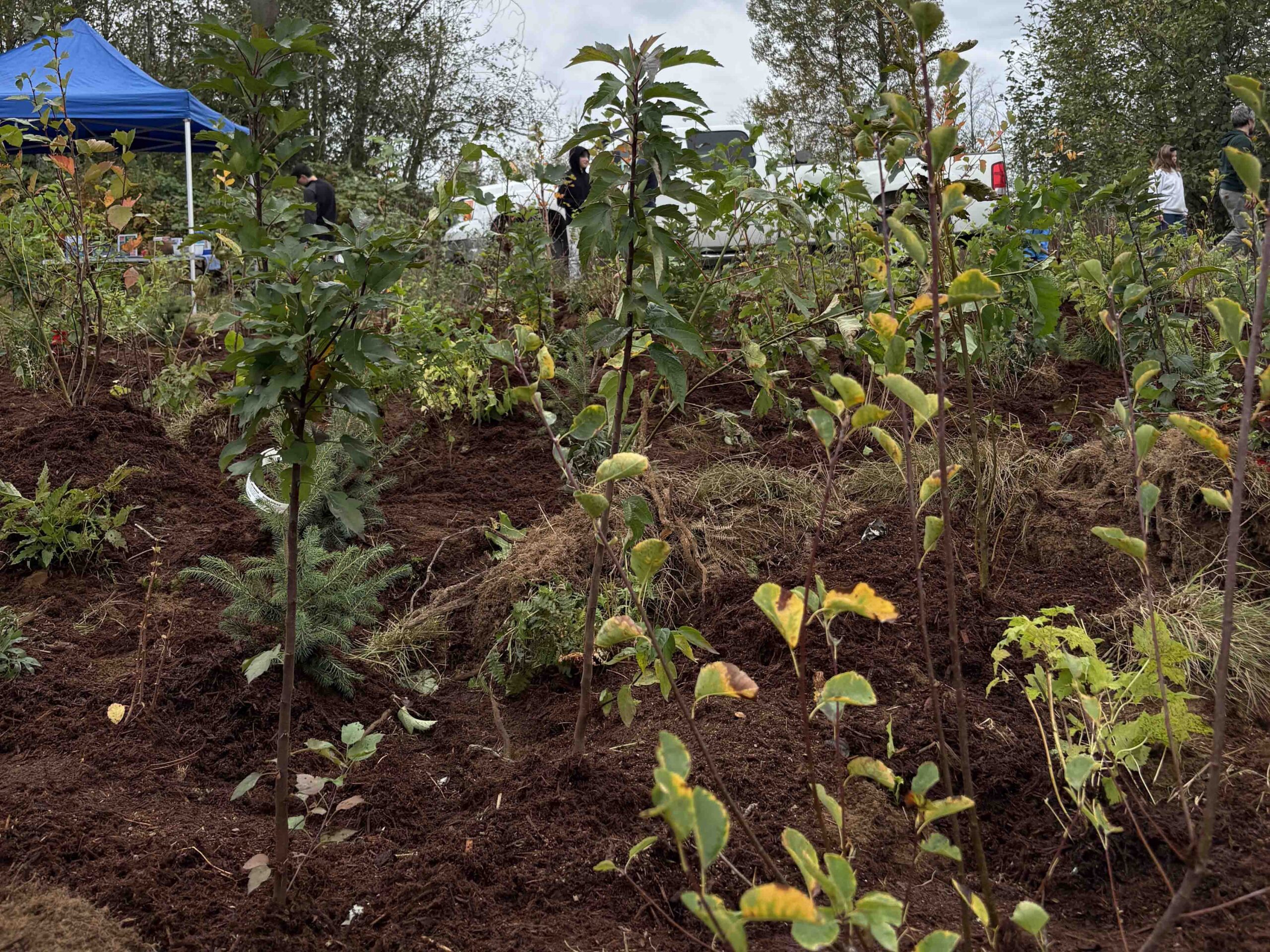
Photo above: The amended soil after planting of the mini forest at Gloucester Park in Langley, BC.
Compost and organic matter
Baseline sampling at Craig Kielburger Secondary School and Parish Park showed that the soil suffered from poor or declining biological conditions. This indicates low organic matter levels and limited particulate organic matter. Particulate organic matter is a key food source for soil microbes. Those microbes are essential for nutrient cycling and healthy tree growth.
These sites pursued intensive strategies to restore the poor or declining biological conditions. At Parish Park, compost and mulch application improved conditions to within optimal and suboptimal ranges.
In all cases where compost was added, sampling showed clear improvements in soil health. Organic matter increased, and so did particulate matter and the availability of nutrients. These changes help improve soil structure, support microbial communities, and provide stronger conditions for root development.
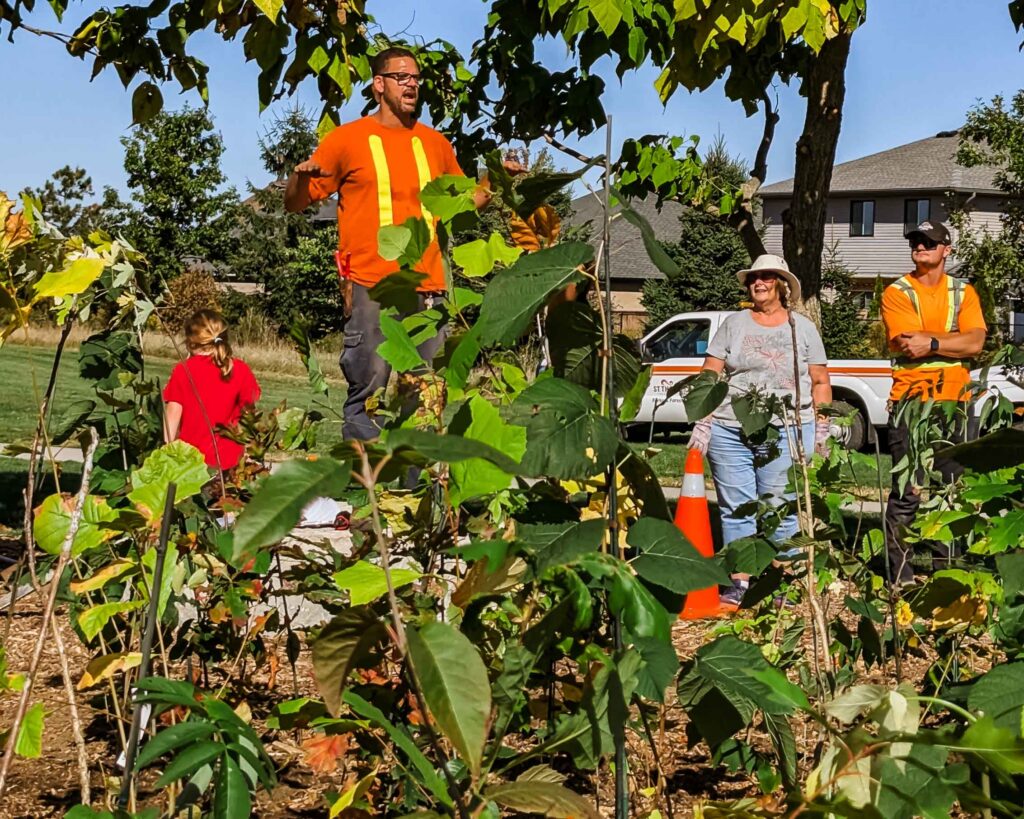
Photo above: Staff with the City of St. Thomas lead a mini forest planting at Parish Park.
Soil respiration
Soil respiration is kind of like how we breathe except it is the soil and everything that lives and grows in it that is doing the breathing. Soil respiration occurs when microbes decompose organic matter, and also with the respiration of plant roots and their associated fungi (mycorrhizae).
Healthy soil respiration is important because those microbes help transform organic matter (compost, leaf litter, manure, etc.) into nutrients that plants can use. Respiration is foundational to the long-term health and resilience of mini forests.
We measure soil respiration by concentration in milligrams per gram of soil (mg/g). The recommended range for soil respiration is above 1.0 mg/g. Anything under 1.0 mg/g means the soil isn’t able to breathe enough.
At Craig Kielburger Secondary School baseline soil respiration ranged from only 0.51–0.66 mg/g. After amendments, respiration increased by 200 per cent to 1.93 mg/g. These amendments also improved the levels of organic matter and particulate organic matter in the soil. In other words, the microbes at Craig Kielburger Secondary School now have better soil respiration and also more organic matter to transform through respiration – both good indicators of the long-term health of these mini forests.
Storing carbon
Beyond growing plants that store carbon from the atmosphere, the soil itself can also store carbon. This is another key benefit of the Miyawaki mini forest method. The enhancement of soil respiration also strengthens the soil’s capacity to store carbon.
Vineland’s measurements showed an increase in the capacity to store carbon in the soil, even after only a short period of time. At Eastview Public School, the initial carbon storage of the soil was 686 kg/100 m2. Just one month after the amendments were added, the carbon storage capacity had increased by 48 per cent to 1,017 kg/100 m2. At the City of Welland’s Logan Avenue mini forest site, targeted amendments increased carbon storage capacity by 61 per cent, from 626 kg/100 m2 to 1,008 kg/100 m2.
The most shocking results
Vineland’s tests showed that each site needed a different plan. Some sites, such as Gloucester Park in Langley, started with relatively healthy organic matter. But an electrical conductivity test revealed that the soil suffered from a poor chemical balance that was limiting soil function.
It may seem shocking – pun intended – that Vineland tests the electrical conductivity of soil. How much electricity soil conducts depends on the concentration of water and dissolved ions. Those dissolved ions can include calcium, potassium, sodium, and other nutrients that are essential to plant and microbe health.
So, even though the soil at Gloucester Park already had optimal organic and particulate matter levels, the poor electrical conductivity showed that it needed specific amendments to improve levels of dissolved nutrients.
Other sites that did suffer from poor levels of organic matter also demonstrated poor baseline electrical conductivity. Parish Park, for example, initially had poor organic matter levels and also low phosphorus and potassium – these elements are critical for energy transfer, water uptake, and root development. With the addition of compost, this site demonstrated improved conductivity and recommended levels of phosphorus and potassium.
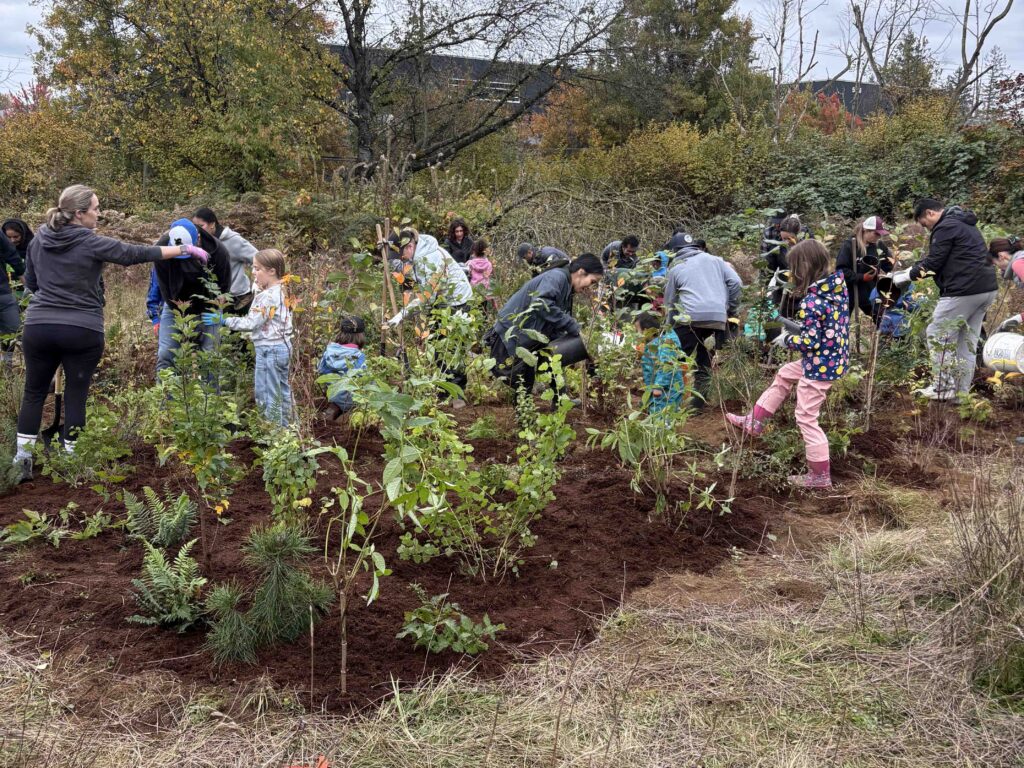
Photo above: Volunteers planting the mini forest at Gloucester Park in Langley, BC.
Why do all this?
We must measure what matters. Informed approaches that restore biodiversity can minimize the need for future interventions and maximize the benefits we all enjoy. Amending soil conditions can create a positively-reinforcing cycle that sustains these mini forests and allows them to continue improving soil health for decades to come. The same cannot always be said for isolated plantings of solitary trees or monocultures.
As the mini forest movement continues to grow, research partnerships like this are helping deepen our understanding of what it takes for mini forests to flourish long-term.
We thank the project partners that participated in this study: Eastview Public School, Langley Environmental Partners Society, Craig Kielburger Secondary School, City of Welland and City of St. Thomas, and Vineland Research and Innovation Centre for their expertise, and for working collaboratively with us during the research process.
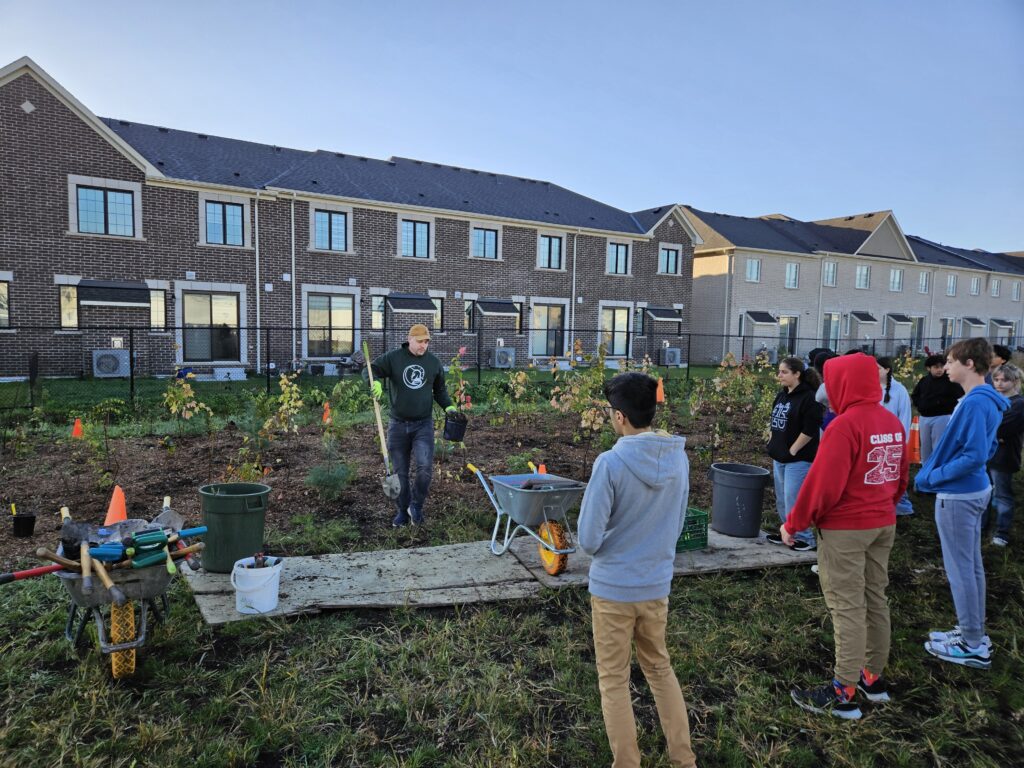
Photo above: Graduates of the Class of 2025 and other students help plant a mini forest at Craig Kielburger School in Milton, Ontario.
This work was made possible by support from the RBC Foundation, an investment that helped communities across Canada build healthier soils and more resilient mini forests for the future.
Join our email community
Subscribe to receive our monthly e-newsletter and more, depending on your preferences!