
Since the early 20th century, Black History Month has provided Black people and the general public with an opportunity to learn from and honour Black history, cultural production, and knowledge. In commemoration of Black History Month, this Resource List has been prepared to initiate the development of a more comprehensive understanding of environmental racism. We have an array of books, articles, and documentaries that discuss environmental justice from Black perspectives.
Books
Non-Fiction
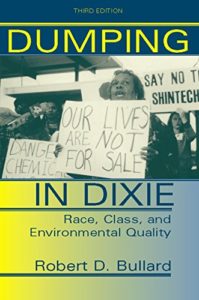
Bullard, Robert D. (1990), Dumping in Dixie: Race, Class, and Environmental Quality, Third Edition. Westview Press.
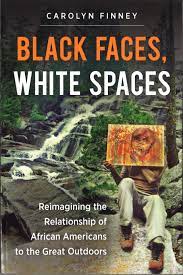
Finney, Carolyn. (2014), Black Faces, White Spaces: Reimagining the Relationship of African Americans to the Great Outdoors. University of North Carolina.
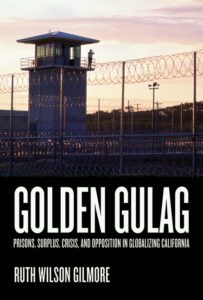
Gilmore, Ruth Wilson. (2007), Golden Gulag Prisons, Surplus, Crisis, and Opposition in Globalizing California. University of California Press, 2007.
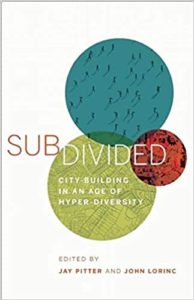
Lorinc, John.,& Pitter, Jay. (2016), Subdivided: City-Building in an Age of Hyper-Diversity. First edition. Coach House Books.
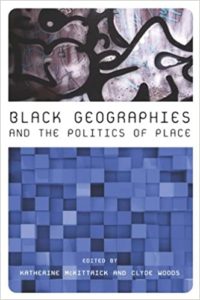
McKittrick, Katherine.,& Woods, Clyde. ed. (2007), Black geographies and the politics of place. Between the Lines.
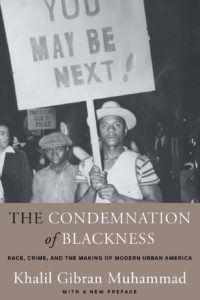
Muhammad, Khalil Gibran. (2019), The Condemnation of Blackness: Race, Crime, and the Making of Modern Urban America. Harvard University Press.
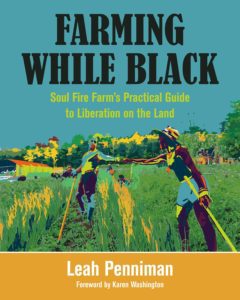
Penniman, Leah. (2018), Farming While Black: Soul Fire Farm’s Practical Guide to Liberation on the Land. Chelsea Green Publishing.
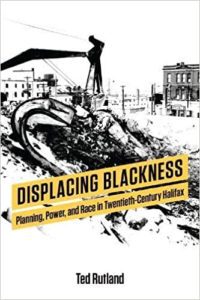
Rutland, Ted. (2018), Displacing blackness: planning, power, and race in twentieth-century Halifax. University of Toronto Press.

Shabazz, Rashad. (2015), Spatializing Blackness: architectures of confinement and Black masculinity in Chicago. University of Illinois Press.
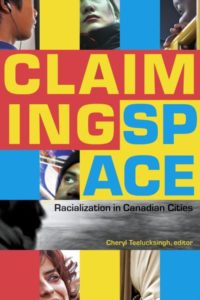
Teelucksingh, Cheryl. (2006), Claiming Space Racialization in Canadian Cities. Wilfred Laurier University Press.
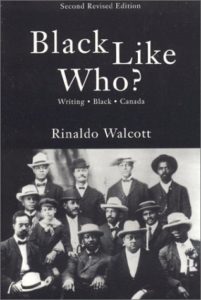
Walcott, Rinaldo. (1997), Black Like Who?: Writing, Black, Canada. Insomniac Press.
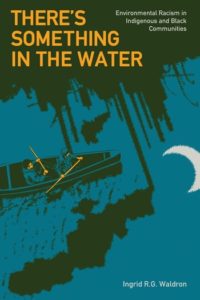
Waldron, Ingrid R.G. (2018), There’s Something In The Water: Environmental Racism in Indigenous and Black Communities. Fernwood Publishers.
Fiction
Black art, including fiction, has always been a key medium for theorization, resistance, and a place to analyse racist violence — including around environmental justice. The following texts broach this subject:

Brand, Dionne. (2002), Thirsty. M&S.
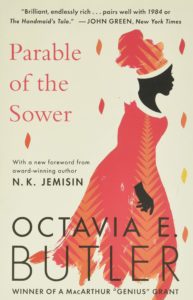
Butler, Octavia. (1993), Parable of the Sower. Warner Books.

Chariandy, David. (2018), Brother. McClelland & Stewart.
 .
.
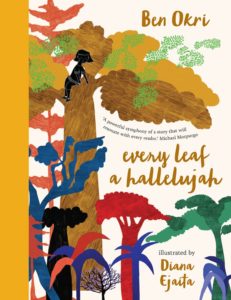
Okri, Ben. (2021), Every Leaf a Hallelujah. Penguin Random House.
Films
The following Canadian films span the course of a few decades and focus on Black experiences related to Black environmental justice issues — particularly those surrounding housing, space, place, and displacement.
https://www.nfb.ca/film/home_feeling_struggle_for_a_community/embed/player
Hodge, Jennifer.,&McTair, Roger. (1983), Home Feeling: Struggle for a Community. National Film Board of Canada. 57:00.
Retrieved from: https://www.nfb.ca/film/home_feeling_struggle_for_a_community/
https://www.nfb.ca/film/remember-africville/embed/player
Mackenzie, Shelagh. (1991), Remembering Africville. National Film Board of Canada. 35:00.
Retrieved from: https://www.nfb.ca/film/remember-africville/
https://www.nfb.ca/film/unarmed_verses/embed/player
Officer, Charles. (2016), Unarmed Verses. National Film Board of Canada. 85:00.
Retrieved from: https://www.nfb.ca/film/unarmed_verses/
Articles
McKittrick, Katherine. (2011), On plantations, prisons, and a black sense of place. Social & Cultural Geography.
Pulido, Laura. (2016), “Flint Michigan, Environmental Racism and Racial Capitalism” Capitalism Nature Socialism 27 (3): 1-16.
Teelucksingh, Cheryl. (2002), Spatiality and environmental justice in Parkdale (Toronto). Ethnologies.
Thomas, Destiny. (2020), ‘Safe Streets’ Are Not Safe for Black Lives. CityLab.
Retrieved from: https://www.citylab.com/perspective/2020/06/open-streets-transportationplanning-urban-design-racism/612763/?utm_source=twb